Korean Etiquette: Common Mistakes Foreigners Make (And How to Avoid Them)
Korea has a rich tradition of social etiquette shaped by Confucian values, age hierarchy, and deep respect for communal harmony. Many of these unwritten rules aren’t obvious to first-time visitors—and breaking them can range from mildly awkward to genuinely offensive. This guide covers the most common etiquette mistakes foreigners make in Korea, with practical advice on what to do instead so you can navigate social situations with confidence.
Drinking Culture: Where Most Mistakes Happen
Pouring and Receiving Drinks
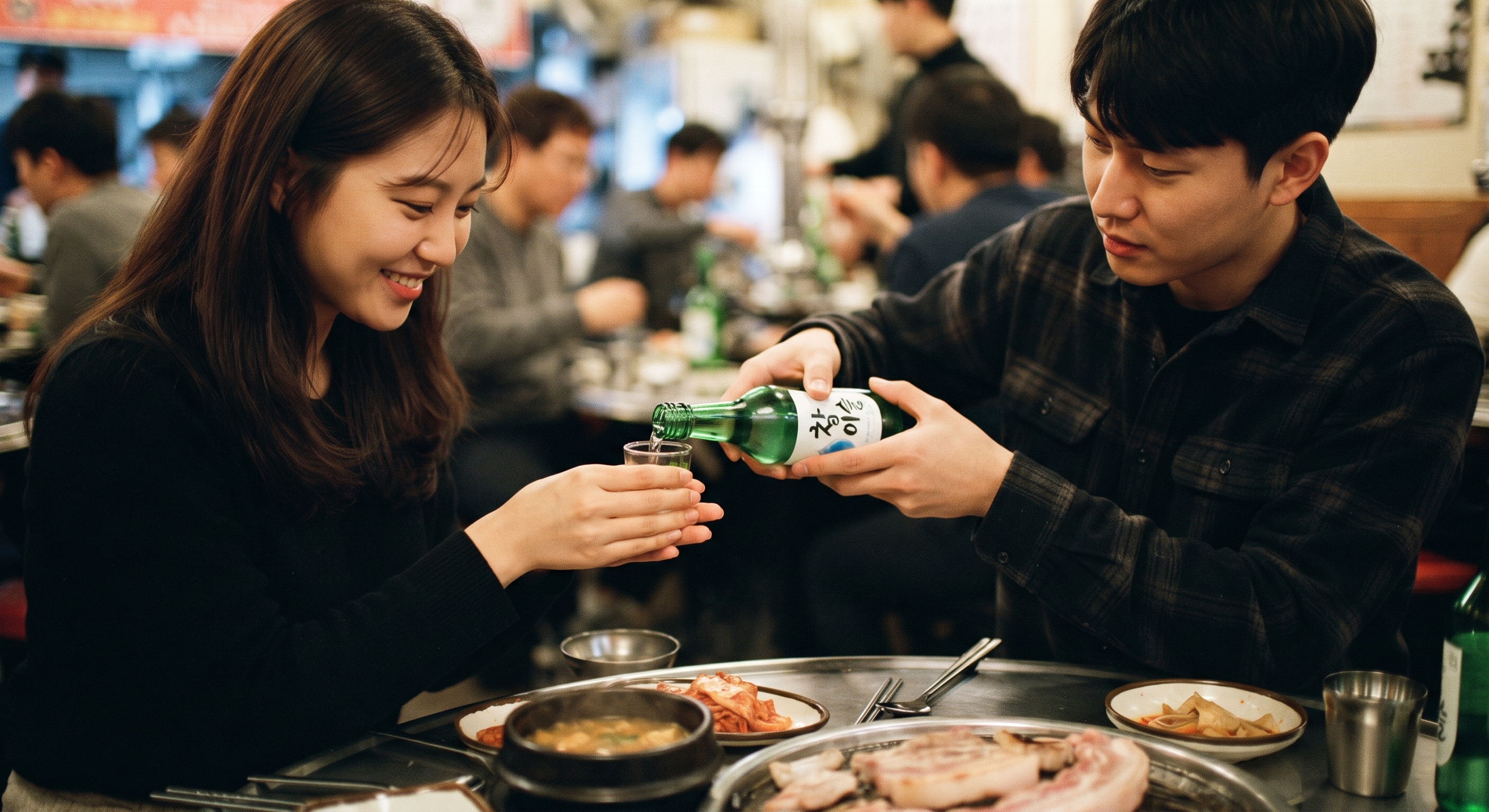
One of the most visible—and most frequently bungled—customs revolves around alcohol. In Korea, you never pour your own drink. Instead, you pour for others, and they pour for yours. It’s a gesture of respect and connection.
When pouring or receiving a drink, use both hands. If you’re pouring, hold the bottle with your right hand and support your right forearm or wrist with your left hand. When receiving, hold your glass with your right hand and place your left hand under the glass or on your chest.
💡 Tip: If someone much older or senior to you is pouring, it’s polite to turn your head slightly away when you drink, rather than making direct eye contact while sipping.
Accepting vs. Refusing Drinks
Refusing a drink from a senior colleague or elder can seem rude, especially in work or formal settings. If you truly can’t drink alcohol, it’s better to accept the glass, touch it to your lips, and set it down rather than outright refuse. You can also quietly mention a health reason (“I’m on medication”) which is usually respected without offense.
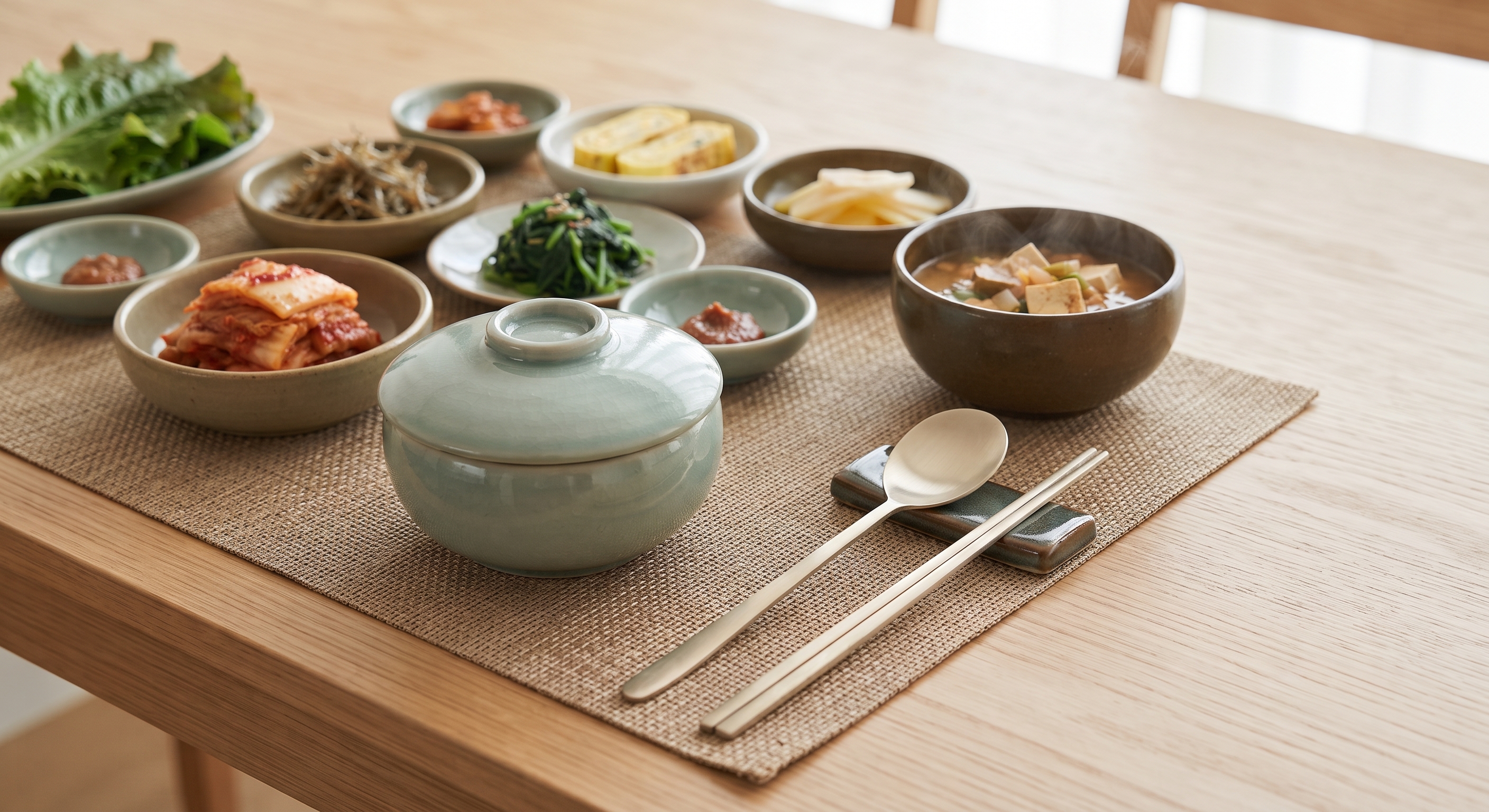
Table Manners That Trip People Up
Chopstick and Spoon Etiquette
Korea uses flat metal chopsticks and a long spoon, both of which feel different from Chinese or Japanese utensils. The biggest mistakes:
- Never stick chopsticks upright in rice. This resembles incense at a funeral and is considered very bad luck.
- Don’t use chopsticks and spoon at the same time. Pick one, use it, then set it down before picking up the other.
- Don’t lift your rice or soup bowl off the table. Unlike in Japan or China, bowls stay on the table while you eat.
- Rest your chopsticks and spoon on the table or a rest—never across the top of a bowl.
Eating Pace and Starting
Wait for the oldest person at the table to pick up their spoon or chopsticks before you begin eating. Similarly, try not to finish drastically ahead of everyone else; a moderate, communal pace is the norm.
Sharing and Side Dishes
Korean meals almost always include banchan (small side dishes) that everyone shares. It’s normal to use your chopsticks directly in these communal dishes—separate serving utensils aren’t standard except at very formal meals. Don’t be surprised, and don’t take the last piece of anything without offering it around first.
Age and Hierarchy: The Foundation of Respect
Why Age Matters So Much
In Korea, age determines speech levels, seating order, who pours drinks, and even who walks through a door first. This isn’t about ego—it’s a social framework for maintaining harmony.
When Koreans meet, they often quickly figure out each other’s age (sometimes directly asking birth year) to establish the right level of formality. As a foreigner, you won’t be expected to master every nuance, but showing awareness earns real respect.
Bowing Basics
A short bow (about 15–30 degrees) is the default greeting. Deeper bows show more respect and are used when meeting elders, parents of friends, or in formal apologies.
When handing something to someone older or higher status—business cards, money, gifts—use both hands. Receiving something? Both hands again. This small gesture signals respect and attentiveness.
Shoes, Personal Space, and Public Behavior
Taking Off Your Shoes
Remove your shoes when entering someone’s home, many traditional restaurants, some guesthouses, and certain temple buildings. There’s almost always a clear entryway step or shoe rack that signals this.
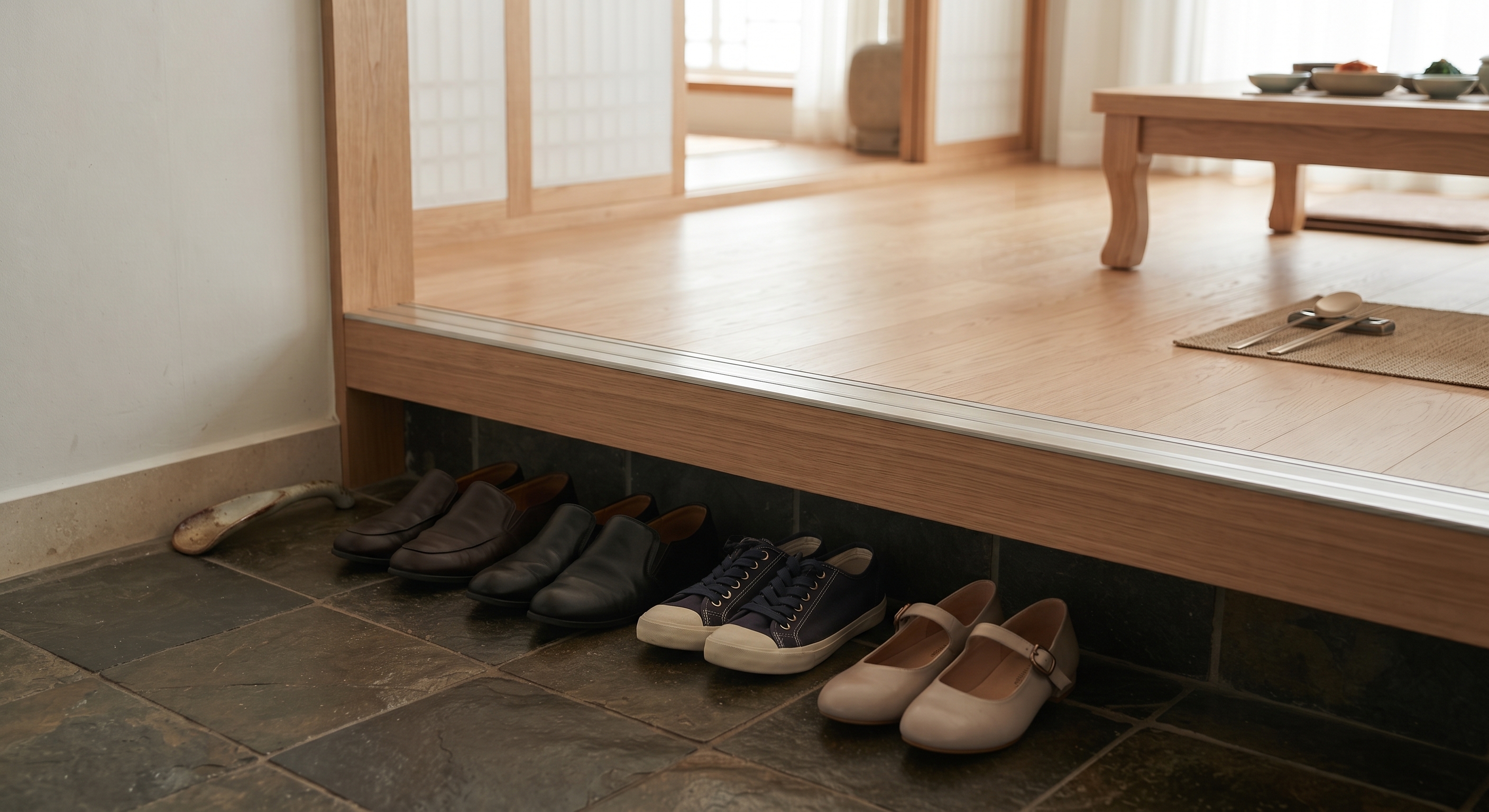
Don’t just kick your shoes off haphazardly—arrange them neatly, ideally pointing toward the door for easy exit. Wearing clean, hole-free socks is a smart move.
Physical Contact and Personal Space
Koreans of the same gender often walk arm-in-arm or hold hands platonically, but public displays of romantic affection (especially kissing) are still relatively uncommon and can draw stares.
Avoid touching someone’s head or shoulder unless you know them well. Pointing with one finger is considered rude—use your whole hand, palm up, instead.
Volume and Public Transport
Keep your voice down on the subway and buses. Phone calls on public transit are frowned upon—if you must take one, keep it very brief and quiet. Eating on the subway is also generally avoided (except on long-distance trains, where it’s fine).
Paying the Bill and Gift-Giving
The “Fight” for the Check
In Korea, splitting the bill evenly (Dutch pay) is common among close friends of the same age, but in mixed-age groups or with seniors, the older or higher-status person usually pays. There’s often a playful “fight” over who gets to pay—don’t just sit back and let someone else grab it without at least offering.
If someone senior insists on paying, accept graciously and say you’ll get it next time. Reciprocity over time matters more than splitting every transaction.
Giving and Receiving Gifts
When giving a gift, use both hands and downplay it (“It’s nothing special”). Koreans usually don’t open gifts in front of the giver—it’s meant to avoid any awkwardness if the gift is disappointing or too generous.
Avoid giving sets of four of anything; the number four sounds like the word for death. Also, don’t write someone’s name in red ink—it’s traditionally associated with death.
Business Card Etiquette
If you’re in Korea for work, exchanging business cards (myeongham) is a small ritual with real weight. Present your card with both hands, text facing the recipient. When you receive one, take it with both hands, look at it carefully for a moment, and place it respectfully on the table in front of you (never in your back pocket immediately).
Treat the card as an extension of the person—crumpling it or writing on it in front of them is insulting.
Final Thoughts: Intent Matters More Than Perfection
No one expects foreigners to know every detail of Korean etiquette, and most Koreans are gracious about small slip-ups. What matters most is showing effort and respect: use both hands when it counts, wait for elders, don’t pour your own drink, and keep your voice down in public.
These gestures signal that you see and value Korean culture, which opens doors to warmer interactions, deeper friendships, and a far richer travel experience. Even a slightly clumsy bow with genuine intent will be appreciated far more than perfect technique with a dismissive attitude.