Korean Convenience Store Snacks You Need to Try
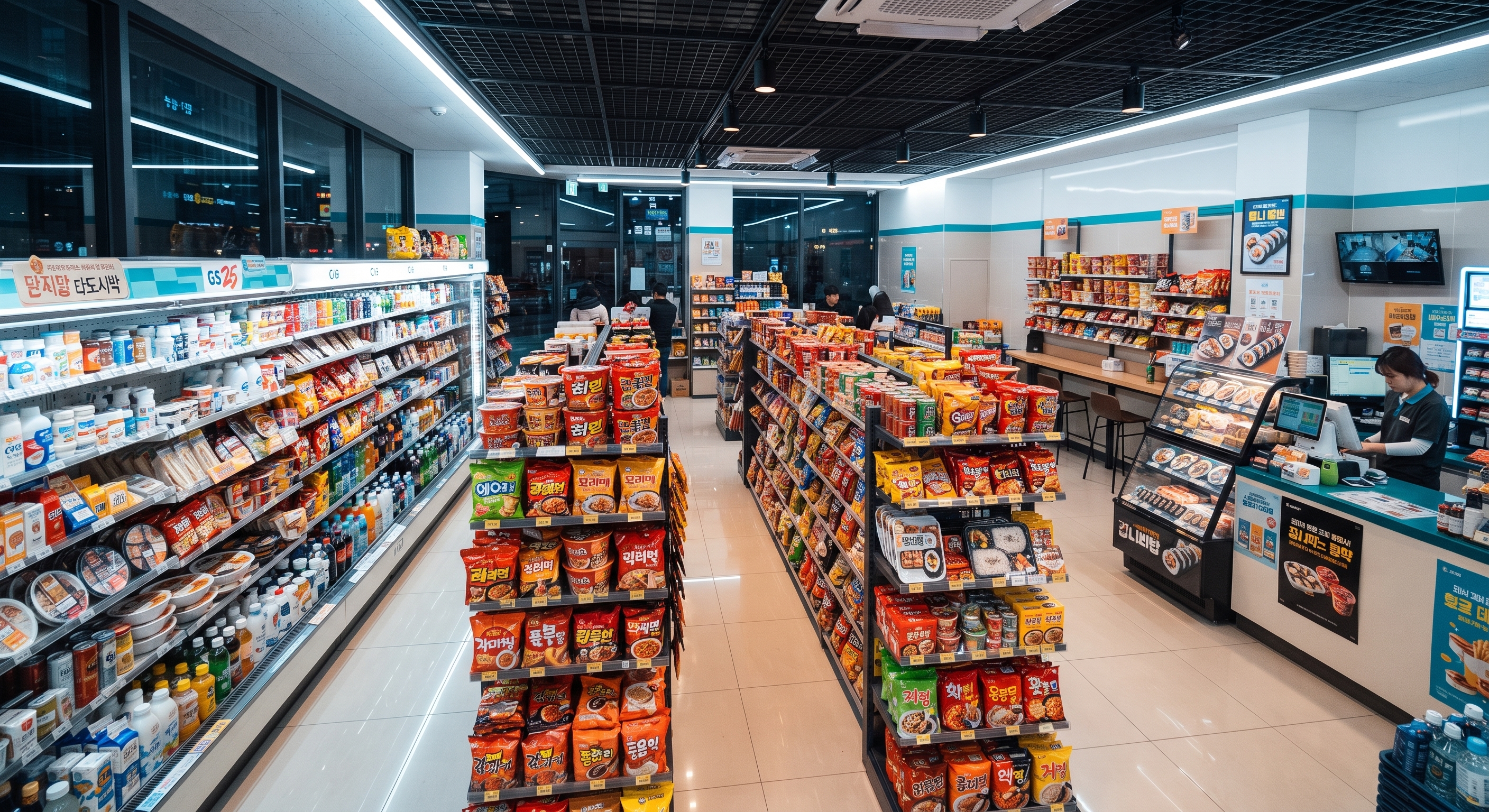
Korean convenience stores aren’t just places to grab a bottle of water—they’re treasure troves of unique snacks, instant meals, and flavors you won’t find anywhere else. Whether you stumble into a CU, GS25, or 7-Eleven on every Seoul street corner, you’ll discover that these chains have perfected the art of affordable, delicious, and often surprisingly high-quality grab-and-go food. Here’s what to look for when you step inside.
Why Korean Convenience Stores Are Different
Unlike their Western counterparts, Korean convenience stores function as mini restaurants and social hubs. Most locations have seating areas with microwaves and hot water dispensers, so you can actually cook and eat your purchases on the spot.
The big three chains—CU, GS25, and 7-Eleven—dominate the landscape, and while they stock many of the same items, each has exclusive products worth seeking out. CU tends to have the most adventurous collaborations and limited editions, GS25 often leads in fresh meal quality, and 7-Eleven (yes, the same global chain) has adapted surprisingly well with Korea-specific items.
Prices are wallet-friendly. Most snacks run between ₩1,000-₩3,000 (roughly $0.75-$2.25), with full meals topping out around ₩5,000-₩7,000.
Triangle Kimbap (Samgak Kimbap)
This is the quintessential Korean convenience store experience. Triangle kimbap looks like a rice ball wrapped in seaweed, but the genius is in the packaging—a three-step unwrapping process keeps the seaweed crisp until the moment you’re ready to eat.
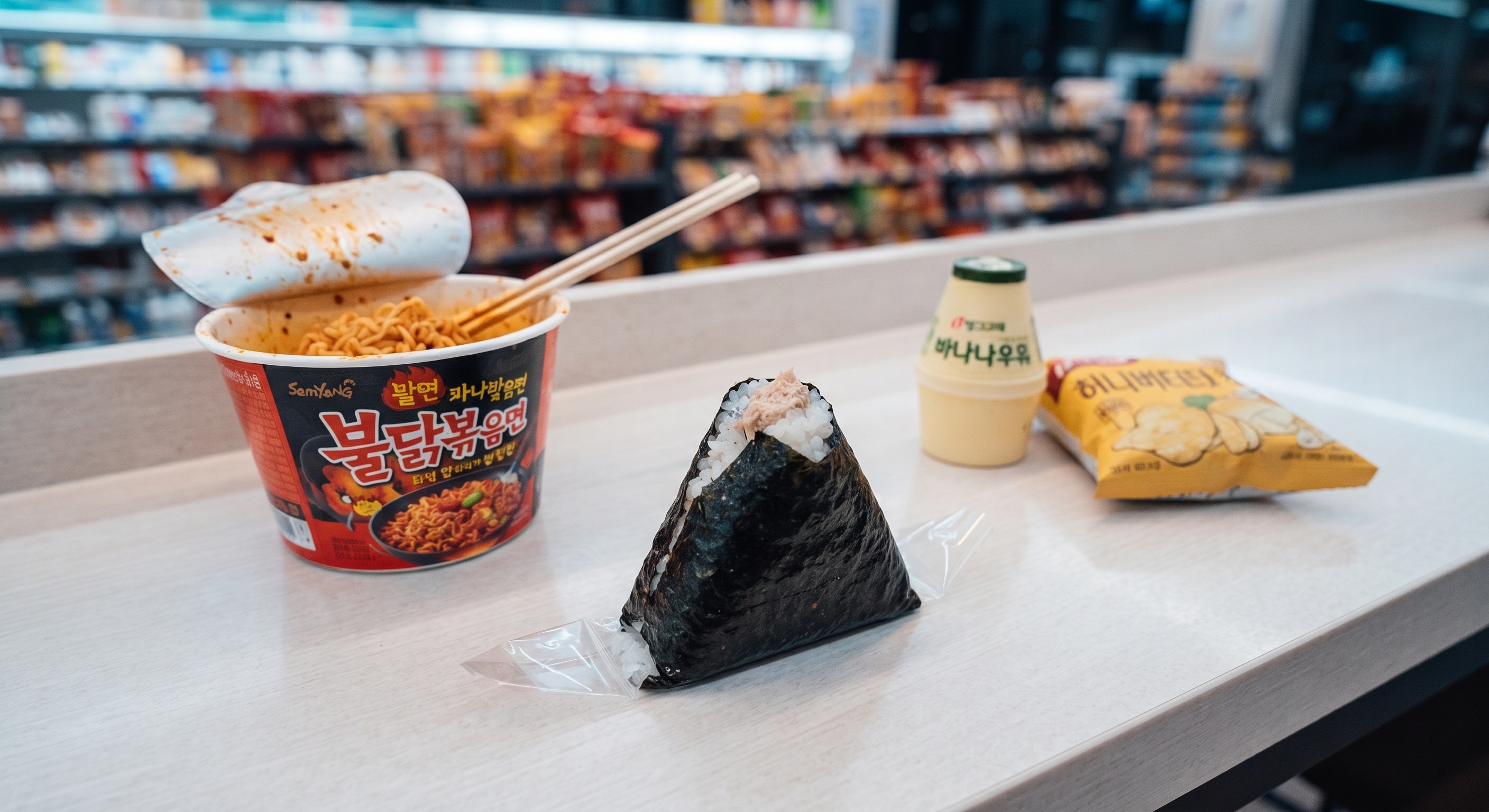
Popular flavors include tuna mayo, kimchi, bulgogi (marinated beef), and spam. The tuna mayo is a safe, universally loved choice, while kimchi offers a tangier, spicier kick. Each triangle costs around ₩1,200-₩1,800.
💡 Tip: Pull the strings on the wrapper exactly as shown in the illustrated instructions—doing it wrong means torn seaweed and a messy experience.
Instant Noodles and Cup Ramyeon
Korean convenience stores stock dozens of ramyeon varieties, from mild to “challenge your friends” spicy. Shin Ramyeon is the classic choice, but don’t sleep on Buldak Bokkeum Myeon (the infamous fire noodles) if you can handle serious heat.
The beauty here is customization. Grab a cup or packet, add an egg or cheese slice from the refrigerated section, and use the hot water dispenser to create a ₩2,000 meal that rivals some restaurant bowls. Many stores also sell tteokbokki cups—instant spicy rice cakes ready in three minutes.
Ready-to-Eat Meals Worth Heating Up
The refrigerated meal section is where Korean convenience stores truly shine. Dosirak (lunchboxes) come in countless varieties—from classic fried chicken with rice to curry, jjajangmyeon (black bean noodles), and even Korean-style pasta.
GS25’s “You Need” private label and CU’s “Hetbahn” microwave rice bowls are particularly good. For around ₩4,000-₩5,500, you get a complete meal that tastes shockingly fresh. The kimchi fried rice and spicy pork bulgogi boxes are reliable favorites.
Don’t overlook the breakfast sandwiches and hotdogs at the hot bar (usually near the register). The corn dogs breaded in ramen noodles or coated in sugar are polarizing but worth trying once.
Korean Snack Staples
Here’s where things get fun. The chip and snack aisle offers flavors that simply don’t exist elsewhere.
Chips and Crunchy Snacks
Honey Butter Chips sparked a nationwide craze years ago and remain a must-try—they taste exactly like buttered popcorn jellybeans, but in chip form. Kkokkal Corn offers sweet, crunchy corn puffs, while Swing Chips (thin potato sticks) come in flavors like cheddar and onion.
For something more traditional, try Bbungtigi (twisted rice crackers) or Matdongsan (crunchy fried snacks with peanuts). These pair perfectly with beer or soju if you’re having a convenience store picnic.
Sweet Treats and Desserts
The bakery section rotates constantly, but Choco Pie is the eternal classic—two soft cake layers with marshmallow filling, dipped in chocolate. The market leader is Orion, but every brand makes a version.
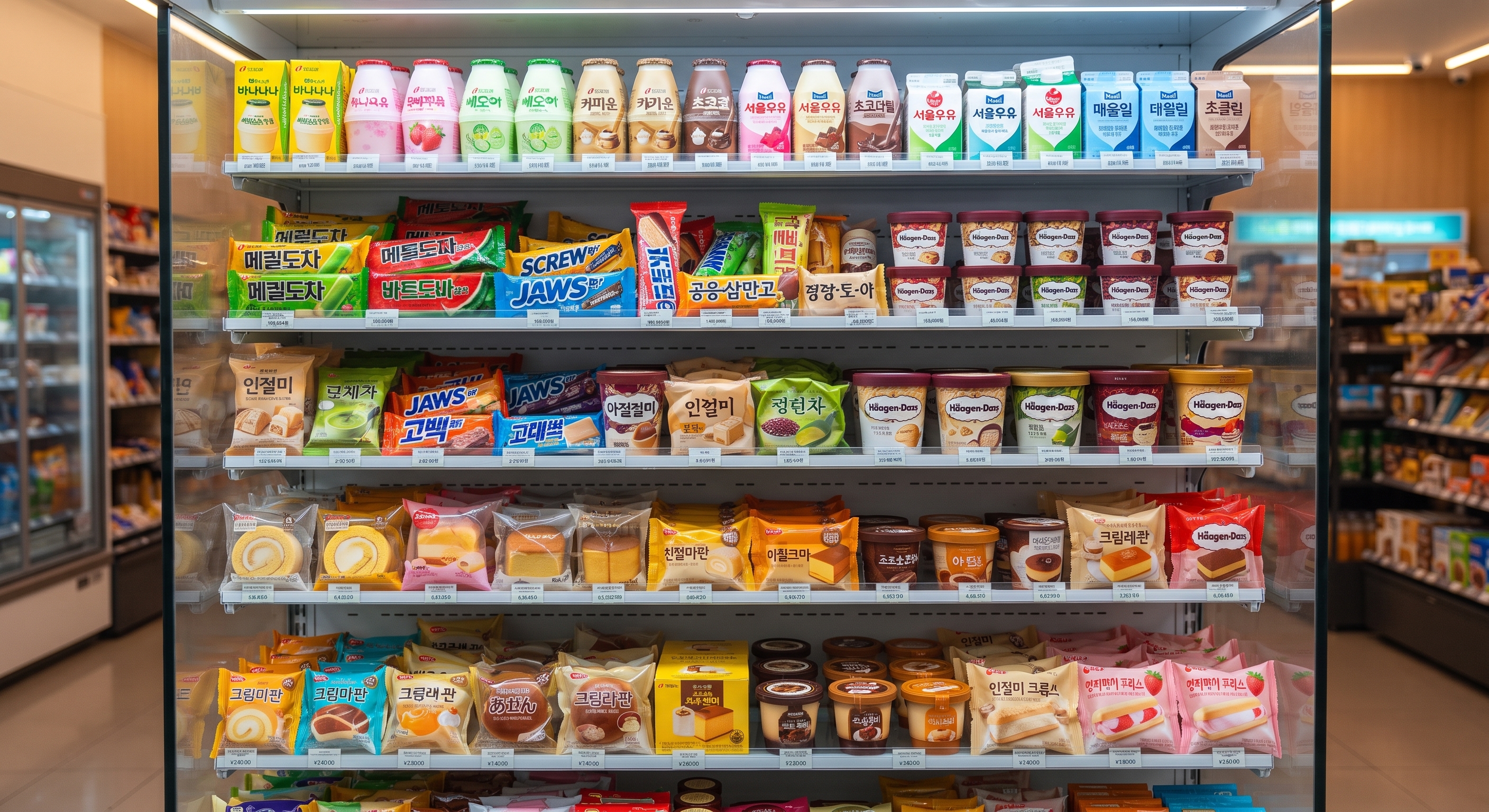
Pepero (Korea’s answer to Pocky) comes in dozens of flavors, from almond to cookies and cream. Seasonal flavors appear constantly, especially around Pepero Day (November 11th).
Don’t miss the refrigerated dessert case: flavored milk drinks (banana, strawberry, coffee) in glass bottles are nostalgic favorites, and rice cakes (tteok) in modern flavors like injeolmi (roasted soybean) ice cream bars blend traditional and contemporary perfectly.
Drinks That Deserve Attention
Beyond the usual sodas, Korean convenience stores offer drinks you won’t find at home. Banana milk in the yellow bottle is iconic—sweet, creamy, and oddly addictive. Milkis is a “milk soda” that tastes like creamy Sprite.
For coffee, the refrigerated canned and bottled coffee drinks (especially the Kanu and Maxim brands) are convenient and actually taste good, unlike many Western gas station coffee drinks. In summer, look for fruit-flavored soju cocktails and makgeolli (rice wine) in small bottles.
Chain-by-Chain Comparison
While overlap exists, each chain has standout exclusive items worth tracking down:
| Chain | Strengths | Must-Try Exclusives |
|---|---|---|
| CU | Limited edition collabs, trendy items | Heyroo desserts, seasonal character tie-ins |
| GS25 | Fresh meal quality, salads | You Need brand meals, fresh fruit cups |
| 7-Eleven | Consistent classics, good hot bar | 7-Select private label snacks, slurpees |
CU tends to have the most Instagram-worthy novelty items and K-pop collaborations. GS25 focuses on quality over gimmicks. 7-Eleven leans into familiar comfort while adapting to Korean tastes.
In practice, you’ll likely visit whichever store is closest—they’re rarely more than a block apart in cities—but if you’re hunting specific exclusive items, it’s worth checking which chain stocks them.
How to Navigate Your First Visit
Walk in, grab a basket, and take your time browsing. The layout is intuitive: refrigerated meals and drinks along the walls, snacks and instant foods in the center aisles, and a hot bar or register area up front.
If you’re eating there, take your items to the register first, pay, then use the microwave and hot water station in the seating area. Most stores have free utensils, napkins, and sometimes even kimchi or pickled radish (danmuji) you can add to your meal.
Start with one or two items rather than buying ten things at once—part of the fun is visiting multiple times and discovering new favorites. Triangle kimbap and a flavored milk make an easy, low-risk first purchase. From there, let curiosity guide you through the ramyeon wall and the snack aisle.
Making the Most of Your Convenience Store Experience
Korean convenience stores are open 24/7, accept card payments (though small cash amounts work too), and require no Korean language skills—just point or use the self-checkout kiosks many chains now offer.
The real joy comes from experimentation. That weird flavor combination? That mascot you don’t recognize? That instant meal with packaging you can’t read? Take a chance. At these prices, even a miss is a cheap, memorable story, and the hits will become highlights of your trip that you’ll wish you could find back home.
Don’t just rush in for a bottle of water. Give yourself fifteen minutes to browse, try something unfamiliar, and experience how Koreans treat convenience stores as an everyday luxury rather than a last resort.