How to Use a T-money Card in Korea: Complete Guide for Visitors
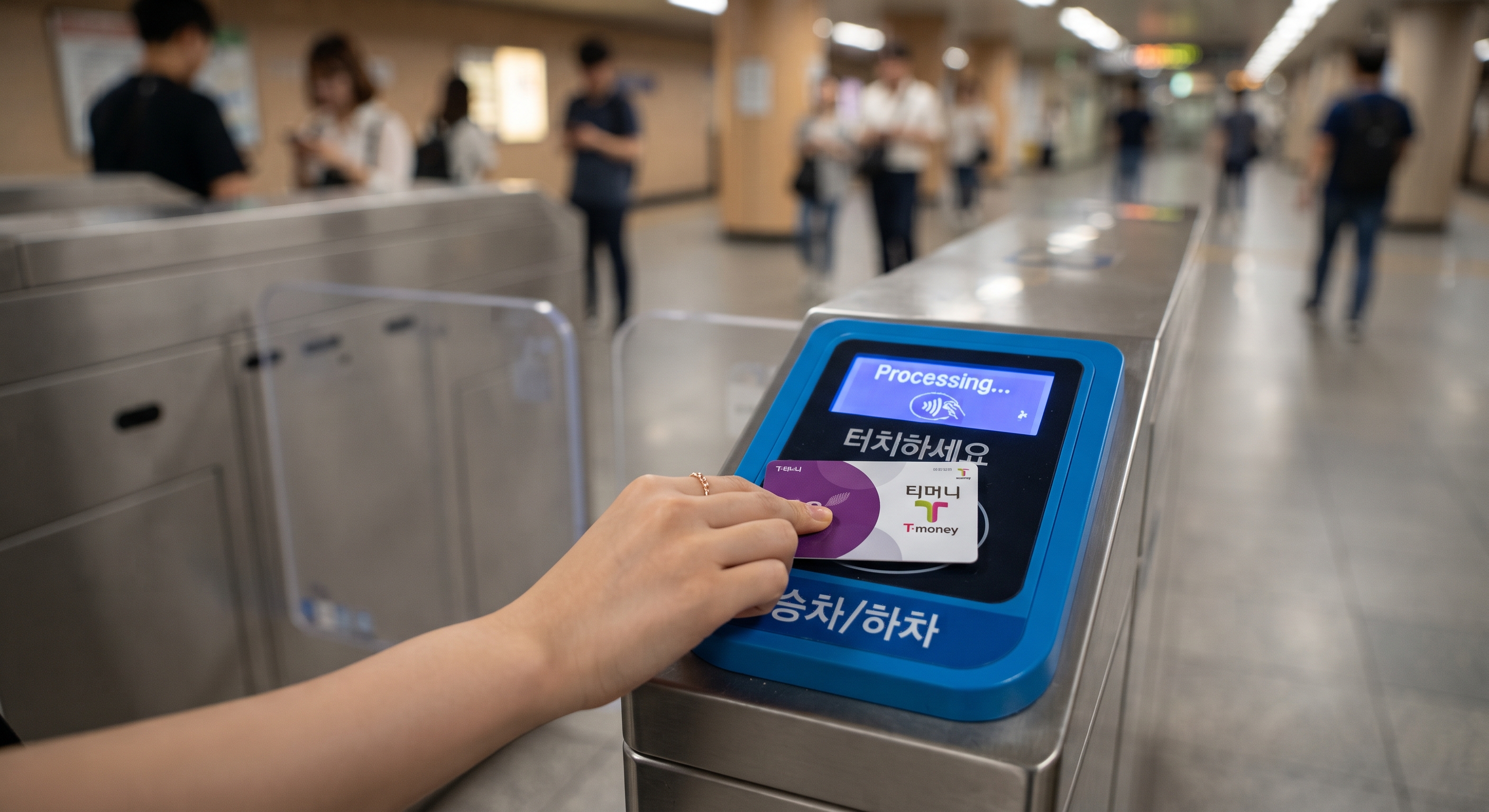
If you’re visiting Korea for more than a day or two, a T-money card will quickly become your most-used item after your phone and wallet. This rechargeable transit card works on subways, buses, taxis, and even at convenience stores across the country—and it’ll save you both money and hassle compared to buying individual tickets every time you ride.
Here’s exactly how to get one, load it with credit, use it, and make the most of it during your trip.
What Is a T-money Card and Why You Need One
T-money is Korea’s primary transportation smart card. Think of it like London’s Oyster card or Japan’s Suica—tap to enter, tap to exit, and the fare is automatically deducted.
You’ll pay less per ride when using T-money versus cash or single-journey tickets. Seoul subway rides cost ₩1,400–₩1,500 with T-money, compared to ₩1,550 for a single-journey ticket. The discount grows if you transfer between subway and bus within 30 minutes (up to 4 transfers allowed), as the system treats it as one continuous journey instead of charging separately.
Beyond transit, T-money works at most convenience stores (GS25, CU, 7-Eleven), vending machines, some taxis, and even certain tourist attractions. You won’t use it everywhere, but having one means carrying less cash.
💡 Tip: T-money cards work nationwide—the same card that gets you around Seoul also works in Busan, Daegu, and other cities.
Where to Buy a T-money Card
You can buy a basic T-money card at:
- Convenience stores (GS25, CU, 7-Eleven, Emart24) – just ask for “T-money kadeu” or point to the display near the register
- Subway station kiosks – vending machines near the entrance or at customer service windows
- Airport arrival halls – look for convenience stores or transit information desks right after you clear customs
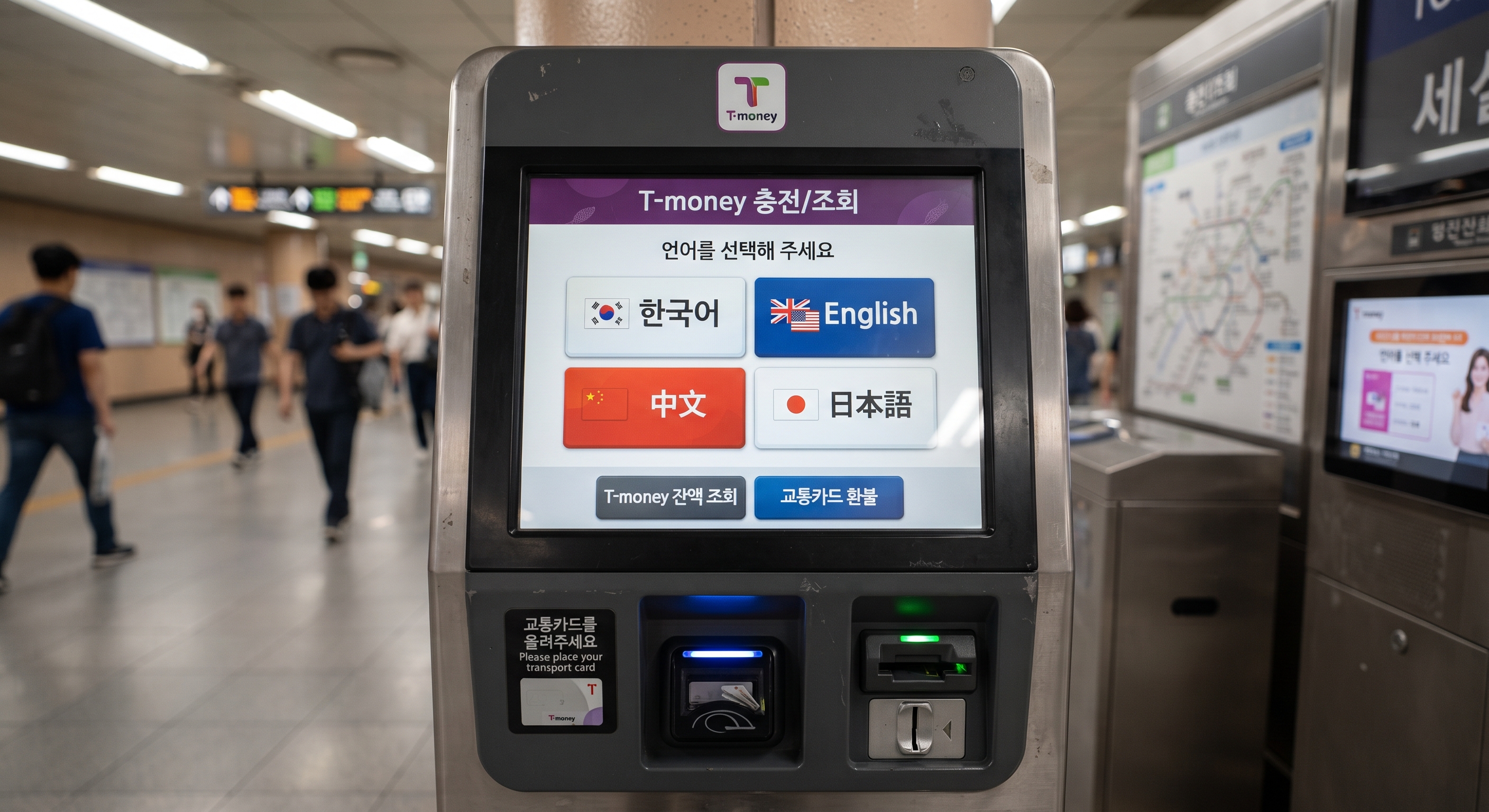
Basic cards cost ₩2,500–₩4,000 and come pre-loaded with zero credit (you’ll add money separately). Character-themed cards featuring LINE Friends, K-pop groups, or cartoon characters cost a bit more (₩5,000–₩8,000) but function identically.
If you prefer, you can also download the T-money app and use your phone via NFC, though physical cards are simpler for most visitors and don’t drain your phone battery.
How to Load Money onto Your T-money Card
Once you have a card, you need to charge it with credit. Here’s how:
At Convenience Stores (Easiest Method)
- Hand your card to the cashier and say the amount you want to add—“man won” (₩10,000), “i-man won” (₩20,000), etc.
- Pay cash or card.
- The cashier taps your T-money card on the reader and hands it back loaded.
How much to load: Most visitors find ₩20,000–₩30,000 lasts 3–5 days of moderate subway/bus use in Seoul. You can reload anytime, so start conservatively.
At Subway Kiosks
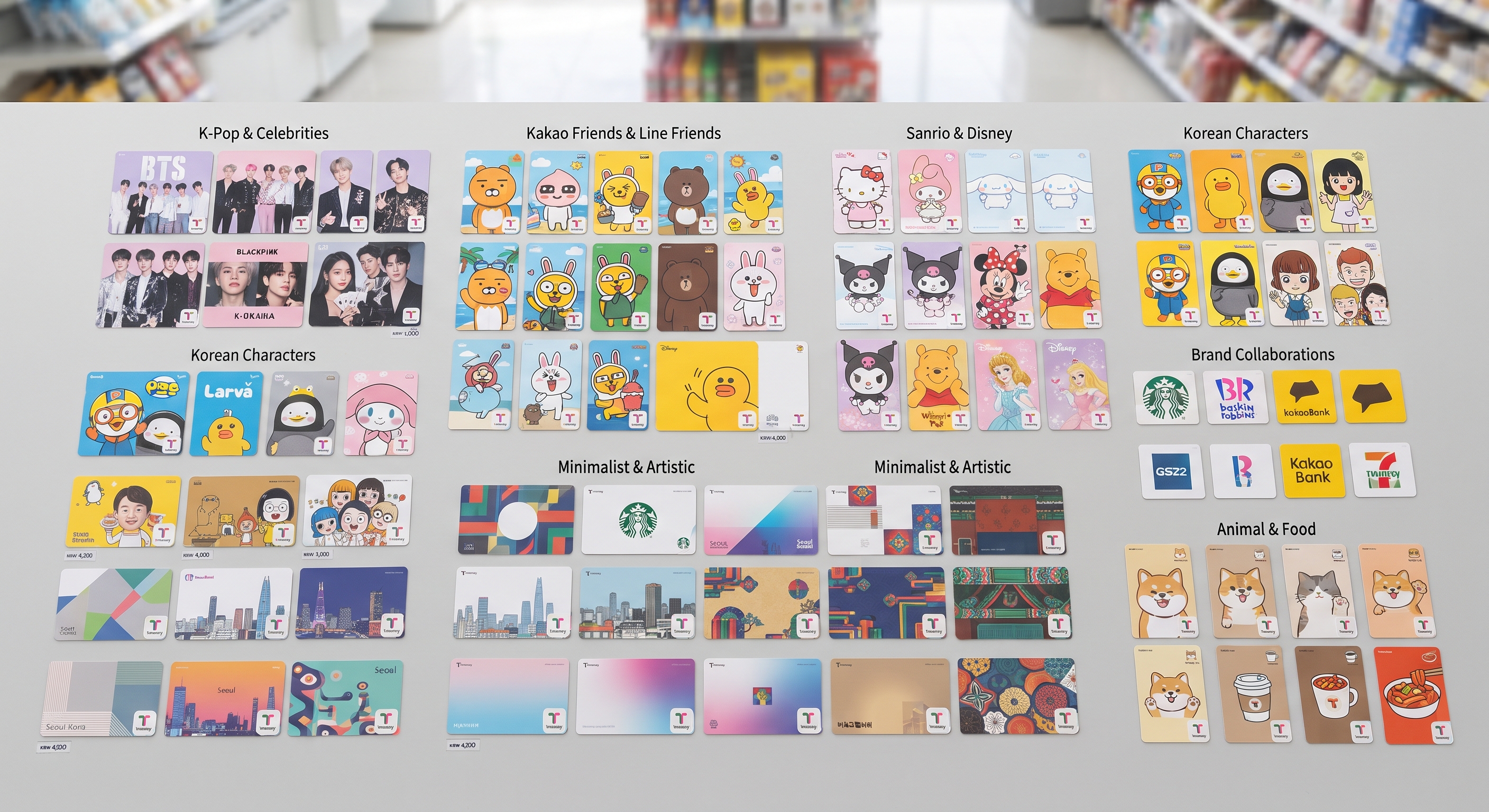
Stations have dedicated recharge machines (look for signs saying “T-money Recharge” or 교통카드 충전). Most have English menus:
- Tap the screen and select “English”
- Place your card on the reader pad
- Choose the amount (₩1,000, ₩5,000, ₩10,000, etc.)
- Insert cash (machines accept ₩1,000 and ₩5,000 notes; some take ₩10,000)
- Card is recharged instantly
These machines do not accept foreign credit cards in most cases—have cash ready.
Using Your T-money Card: Step-by-Step
On the Subway
- Entering: Tap your card on the blue sensor pad at the turnstile. Wait for the green light and “beep,” then walk through.
- Exiting: Tap again at your destination station’s turnstile. The correct fare is deducted only when you tap out—if you forget to tap out, you may be charged a maximum fare next time you use it.
Check your remaining balance on the small display screen after each tap.
On Buses
- Boarding: Tap the card reader near the driver as you get on.
- Transferring: Tap again when you get off if you plan to transfer to another bus or subway within 30 minutes (this registers your transfer discount).
- Final stop: Tap when exiting your last bus.
Bus card readers show your balance and whether a transfer was registered, but only in Korean—watch for numbers to confirm.
In Taxis
Not all taxis accept T-money, but many do. Look for a card reader device mounted near the meter. Ask the driver “T-money dwae-yo?” (T-money okay?) before starting the ride. At the end, tap your card on the reader—payment is instant.
At Convenience Stores
Tap your card on the counter reader when paying. The amount is deducted just like a debit card. This is handy for small purchases (snacks, drinks) when you don’t want to fumble with coins.
Checking Your Balance
You can check your T-money balance:
- At any subway tap reader – the screen displays your balance after you tap
- At convenience store readers – ask the clerk to check (just hand them the card and say “balance”)
- On the T-money app – if you’ve registered your card number
Machines and apps display balances in won. Keep at least ₩1,500 on the card to cover a basic subway ride.
Getting a Refund When You Leave
If you have leftover credit and you’re leaving Korea, you can get a refund at:
- Convenience stores – for balances under ₩20,000 (small service fee may apply)
- Subway station customer service centers – for any amount
The card itself is non-refundable—the ₩2,500–₩4,000 you paid for it is a purchase, not a deposit. Many visitors keep the card as a souvenir or save it for a future trip (cards don’t expire, and stored credit stays valid).
If your remaining balance is small (under ₩5,000), it’s often easiest to just spend it on snacks at a convenience store before you head to the airport.
Common Questions and Tips
Can I share one card with a friend?
No. Each person needs their own card—turnstiles and buses only deduct one fare per tap.
What if my balance runs out mid-trip?
Subway turnstiles won’t let you exit if your balance is insufficient. Look for a “recharge” or “fare adjustment” machine right outside the exit gates—add cash, tap your card, then exit.
Do kids need a T-money card?
Children under 6 ride free (no card needed). Ages 6–12 get discounted fares but need a special youth-rate card (harder to obtain as a tourist). Most visitors just buy regular adult cards for school-age kids to simplify things.
T-money vs. Cashbee—what’s the difference?
Cashbee is a competing card system. Both work on Seoul/national transit and at many stores. T-money is slightly more common and easier to find, but either works fine. Don’t overthink it.
Final Thoughts
Getting and using a T-money card is genuinely simple, even if you don’t speak Korean. Buy one at a convenience store on your first day, load ₩20,000 or so, and you’re set for seamless travel across Korea’s excellent public transit network.
The few thousand won you spend on the card will pay for itself in fare discounts within a couple of days—and you’ll skip the hassle of ticket machines, coins, and language barriers every single time you ride. Tap in, tap out, and spend your energy exploring instead of figuring out fares.