How to Order Coffee Like a Local in Seoul
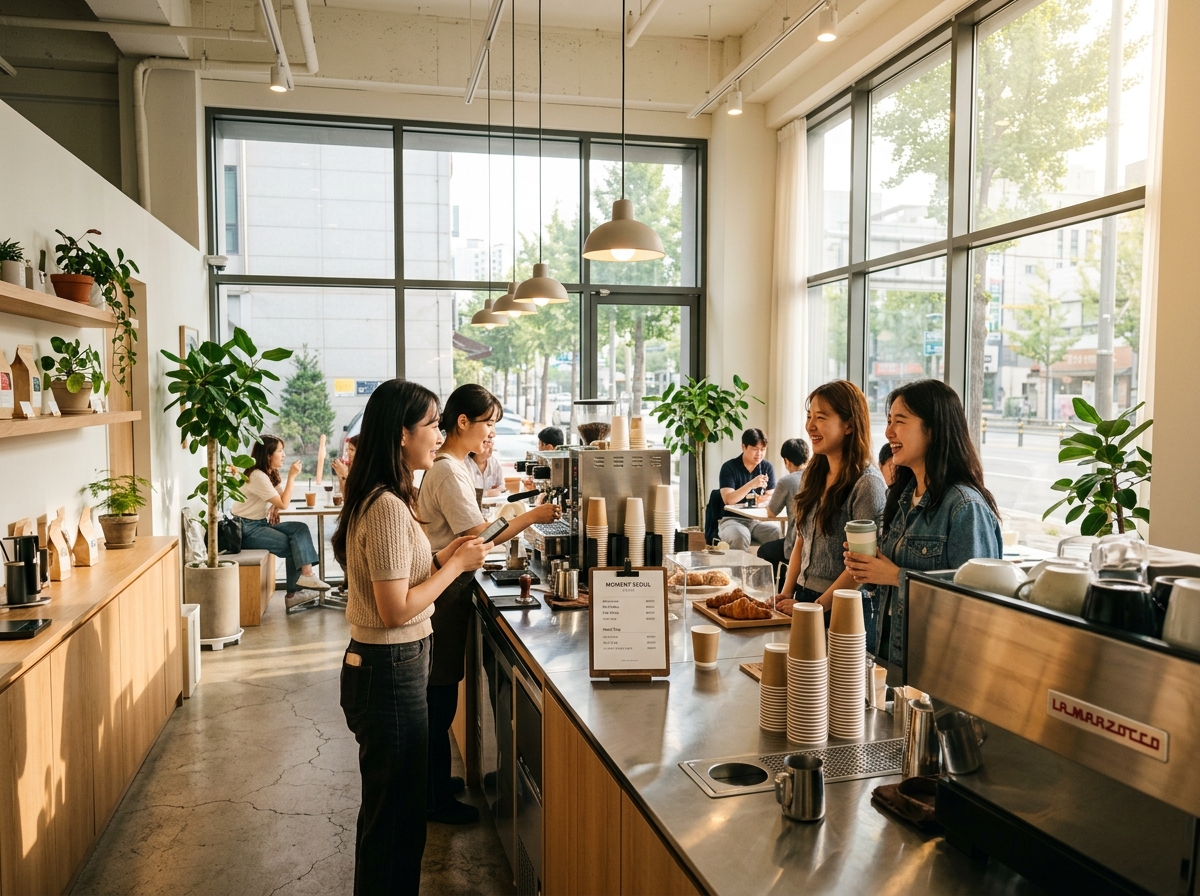
Seoul runs on coffee. With more cafés per capita than almost any city on earth, ordering your morning cup is a daily ritual—and doing it smoothly will make you feel less like a tourist and more like a regular. This guide breaks down exactly what to say, what locals actually order, and the unspoken rules that’ll help you blend in at any Seoul coffee shop.
Understanding the Korean Coffee Menu
Walk into any Seoul café and you’ll notice something immediately: menus are often bilingual, but not always in the way you’d expect. Chain cafés typically display prices and names in both Korean and English, while independent shops may use Korean-only menus or handwritten boards.
The good news? Korean coffee culture borrows heavily from English vocabulary, so many drink names are recognizable. “Americano” is 아메리카노 (ah-meh-ri-ka-no), “latte” is 라떼 (la-teh), and “cappuccino” is 카푸치노 (ka-pu-chi-no). You’ll see these written in Korean script, but they sound remarkably similar when spoken.
What Locals Actually Order
Forget the pumpkin spice trend—Seoul has its own coffee favorites. The iced Americano (아이스 아메리카노) reigns supreme year-round, even in winter. Koreans prefer their coffee simple, strong, and cold, and the iced Americano is the default order for millions of office workers.
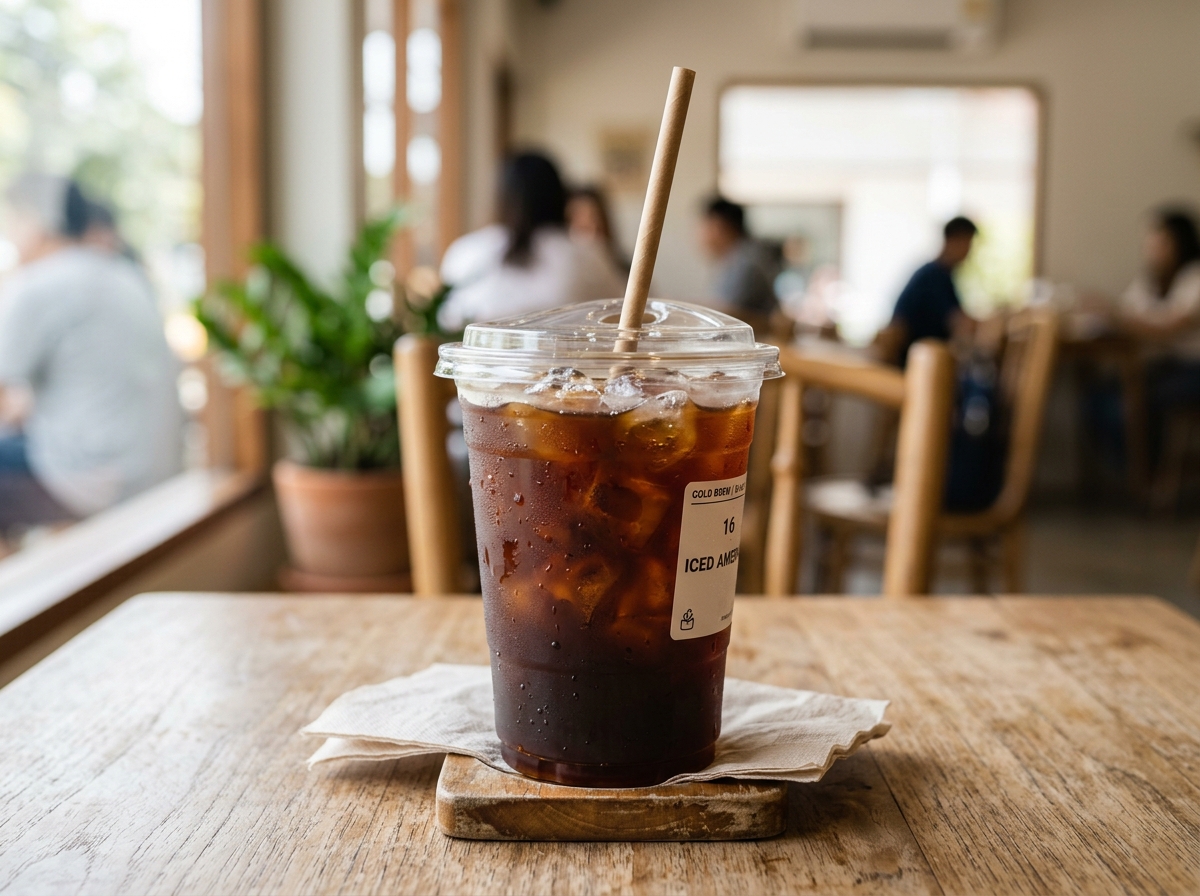
Other popular choices include:
- Café latte (카페라떼) – almost always ordered iced unless you specify hot
- Vanilla latte (바닐라라떼) – the go-to sweet option
- Einspänner (아인슈페너) – iced Americano topped with a thick layer of whipped cream, a uniquely Korean-popularized drink
- Cold brew (콜드브루) – gaining popularity in specialty cafés
Hot drinks are less common except during the coldest months, and if you don’t specify temperature, many baristas will assume you want your drink iced.
How to Order: The Actual Process
The ordering process in Seoul cafés follows a predictable pattern that’s different from Western coffee shops in a few key ways.
Step 1: Choose Your Drink Size
Most cafés offer two to three sizes, but the naming can be confusing. Instead of “tall/grande/venti,” you’ll typically see:
| Size | Korean | Approximate Volume |
|---|---|---|
| Small/Regular | 레귤러 (regular) | 8-12 oz |
| Large | 라지 (large) | 12-16 oz |
Some chains add a “Tall” option, but most locals stick to regular or large. The price difference is usually 500-1,000 won.
Step 2: For Here or To Go?
You’ll be asked “여기서 드세요?” (yeo-gi-seo deu-se-yo?), which means “for here?” or “가져가세요?” (ga-jyeo-ga-se-yo?) for “to go?”
Simple responses:
- For here: “여기요” (yeo-gi-yo) or just “네” (neh, yes)
- To go: “포장이요” (po-jang-ee-yo) or “테이크아웃이요” (take-out-ee-yo)
If you’re staying, you’ll get a ceramic or glass cup. To-go orders come in disposable cups—but note that many cafés now charge an extra fee (usually 300-500 won) for disposable cups as part of Korea’s environmental initiatives.
The Unspoken Café Etiquette Rules
Understanding what to order is only half the battle. Here’s what separates tourists from locals in Seoul coffee shops.
Pay First, Collect Later
Unlike many Western cafés where you wait at the counter, Seoul cafés use a buzzer or number system. After paying, you’ll receive a vibrating pager or a number card. Find a seat, and when your drink is ready, the buzzer will light up and vibrate, or your number will appear on a screen.
Return to the counter to pick up your drink—don’t wait for someone to bring it to you.
The Self-Service Station is Your Friend
Every Seoul café has a self-service area with water, napkins, straws, and sometimes sugar or cinnamon. After picking up your drink, grab whatever you need here—staff won’t bring you extras.
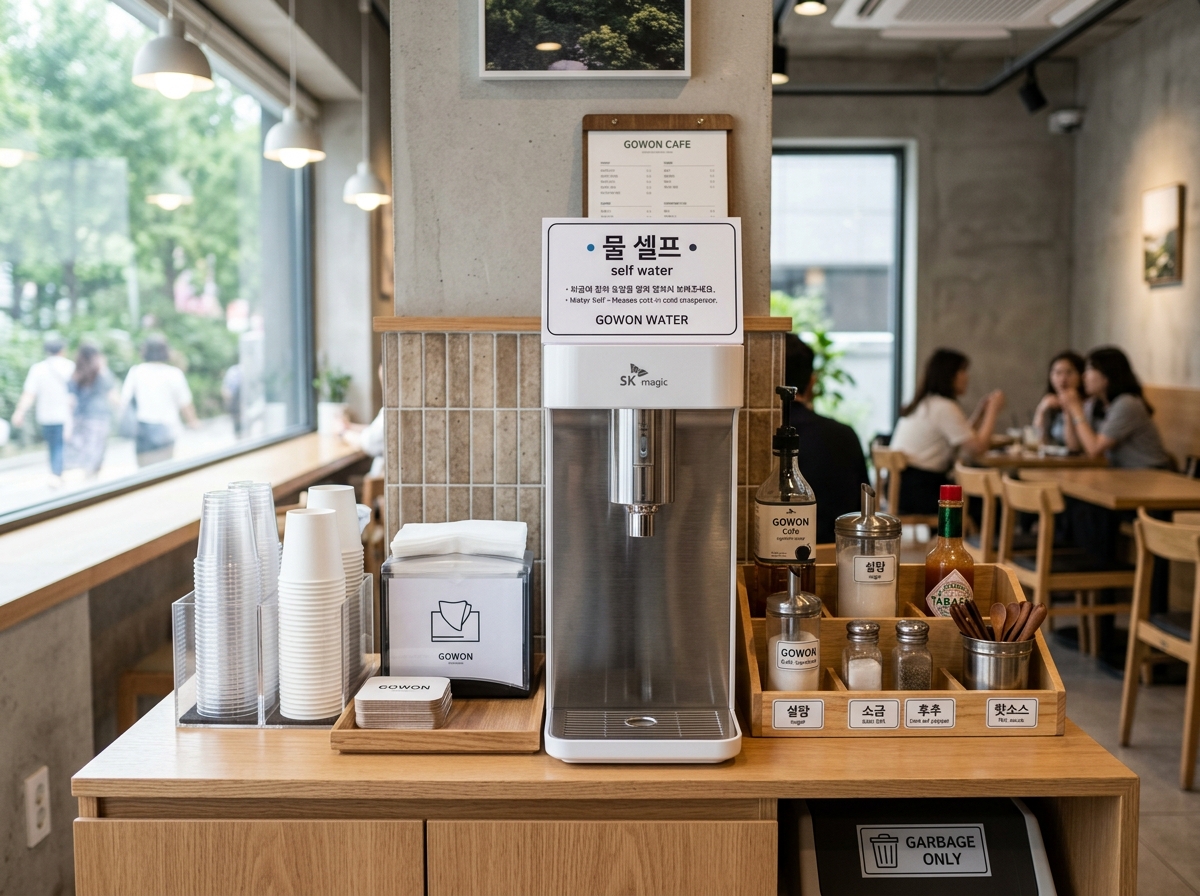
This is also where you’ll find trash and recycling bins. Koreans are meticulous about separating waste, so you’ll typically see separate slots for plastic cups, lids, paper, and general trash.
Noise Levels and Laptop Culture
Seoul cafés are quieter than you might expect. While not silent, conversations tend to be lower-volume, and phone calls are often taken outside or in entryways.
Laptop use is completely normal and even encouraged—many locals camp out for hours studying or working. Free WiFi is standard, and outlets are plentiful. Don’t feel rushed to leave after finishing your drink.
Useful Phrases for Ordering
You can get by with pointing and basic English in most Seoul cafés, but a few Korean phrases will earn you smiles and smoother service.
Basic order template:
“[Drink name] [size] [hot/iced] 주세요” (ju-se-yo)
For example:
- “아이스 아메리카노 라지 주세요” = Large iced Americano, please
- “카페라떼 레귤러 따뜻한 거 주세요” = Regular hot café latte, please
Other helpful phrases:
- Hot: 따뜻한 거 (tta-ddeu-tan geo) or 핫 (hot)
- Iced: 아이스 (ice) or 차가운 거 (cha-ga-un geo)
- Less ice: 얼음 적게 (eo-reum jeok-ge)
- No sugar: 설탕 빼고 (seol-tang ppae-go)
- Extra shot: 샷 추가 (shotchu-ga)
💡 Tip: If your Korean is limited, ordering an “아이스 아메리카노” (ice americano) with a smile works everywhere and marks you as someone who knows what locals drink.
Coffee Chains vs. Independent Cafés
Seoul offers both territory, and each has different advantages for visitors.
The Big Chains
Starbucks, Ediya, Paik’s Coffee, Mega Coffee, and Compose Coffee dominate street corners. These are reliable, affordable (independent shops run 4,500-6,000 won for an Americano; chains like Mega or Compose often charge 1,500-2,500 won), and beginner-friendly with English menus and bilingual staff.
They’re perfect when you need consistency, WiFi, and a safe ordering environment. The quality is decent, though rarely exceptional.
Independent “감성” Cafés
Seoul’s independent café scene is where the magic happens. These “감성 카페” (gam-seong kape), or “aesthetic cafés,” range from minimalist concrete spaces to vintage-themed hideaways, plant-filled greenhouses, and rooftop gardens.
The coffee is generally better, the atmosphere more unique, and the experience more memorable—but menus may be Korean-only, and staff might have limited English. This is where your phrase list comes in handy, or where simply pointing to what someone else is drinking works perfectly.
Final Thoughts: Coffee is Connection
Ordering coffee in Seoul isn’t just about caffeine—it’s a window into daily Korean life. The ritualized simplicity of the iced Americano, the communal hum of a neighborhood café at 3 PM, the careful separation of trash at the self-service station—these small details reveal a culture that takes its coffee seriously but without pretension.
Start with the basics, lean into the iced Americano, and soon enough you’ll be navigating Seoul cafés with the confidence of a local.