A Beginner's Guide to Korean Street Food
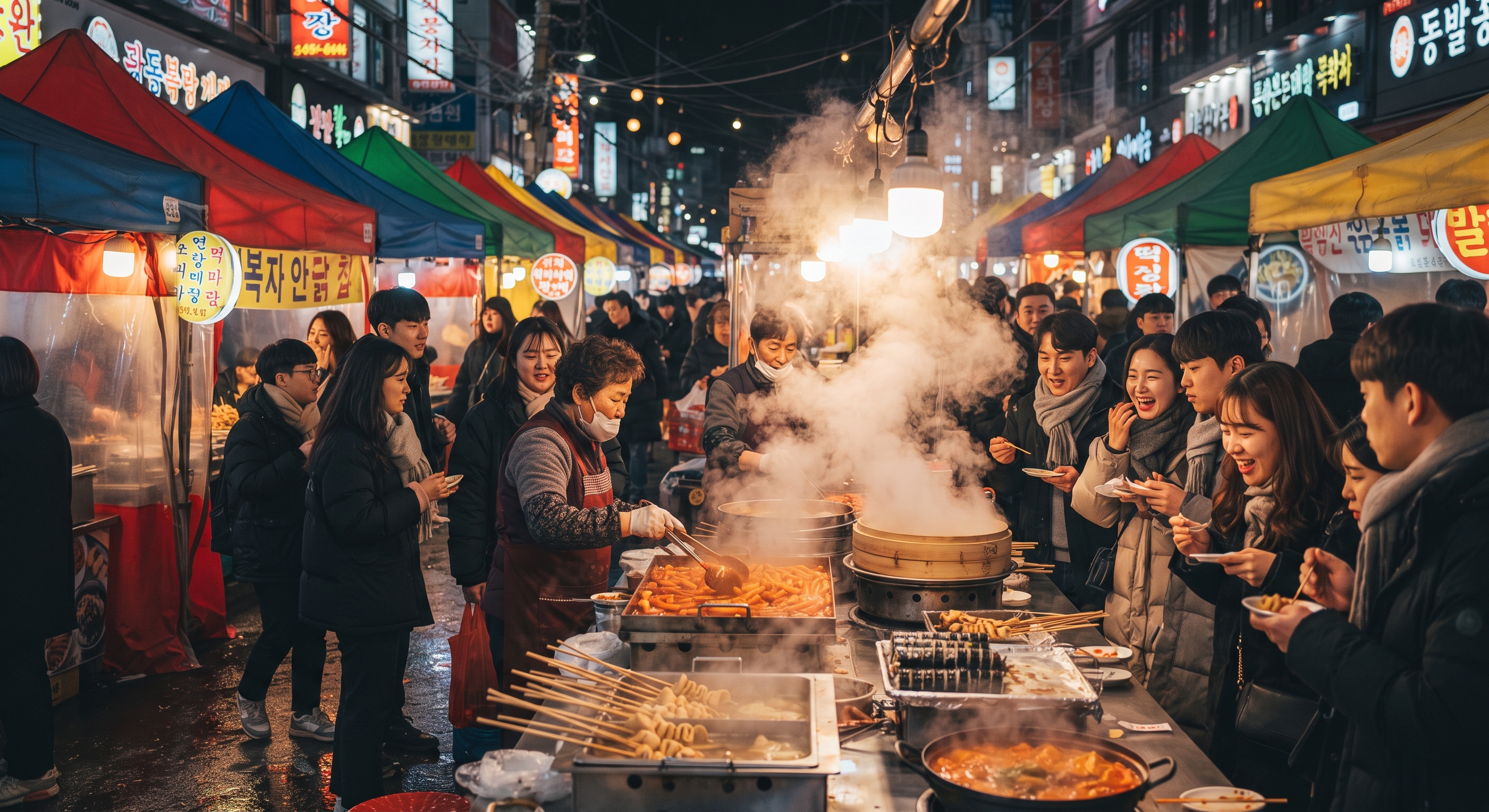
Korean street food is one of the most accessible, affordable, and delicious ways to experience the country’s food culture. Whether you’re wandering through Seoul’s busy markets or exploring a provincial town, street vendors serve everything from savory skewers to sweet pancakes—usually for less than the cost of a coffee back home. This guide will walk you through what to try, where to find it, and how to navigate the experience with confidence.
What Makes Korean Street Food Different
Korean street food sits somewhere between fast food and home cooking. Most vendors specialize in just one or two items, perfecting them over years or even decades. You’ll see the same classics—tteokbokki, hotteok, odeng—at stalls across the country, but each vendor adds their own spin on spice level, sweetness, or cooking technique.
Unlike food trucks in Western cities, Korean street vendors often operate from semi-permanent tents or carts in designated areas: subway exits, markets, shopping districts, and near universities. Some set up only in the evening; others run all day. Payment is usually cash, though more vendors now accept cards or mobile payment apps like Kakao Pay.
💡 Tip: Carry small bills (₩1,000 and ₩5,000 notes) for street food. Not all vendors can break a ₩50,000 note, especially during busy hours.
The Essential First-Timer Dishes
If you’ve never tried Korean street food, start with these crowd-pleasers. They’re available nearly everywhere, easy to eat while walking, and represent the core flavors you’ll encounter again and again.
Tteokbokki (Spicy Rice Cakes)
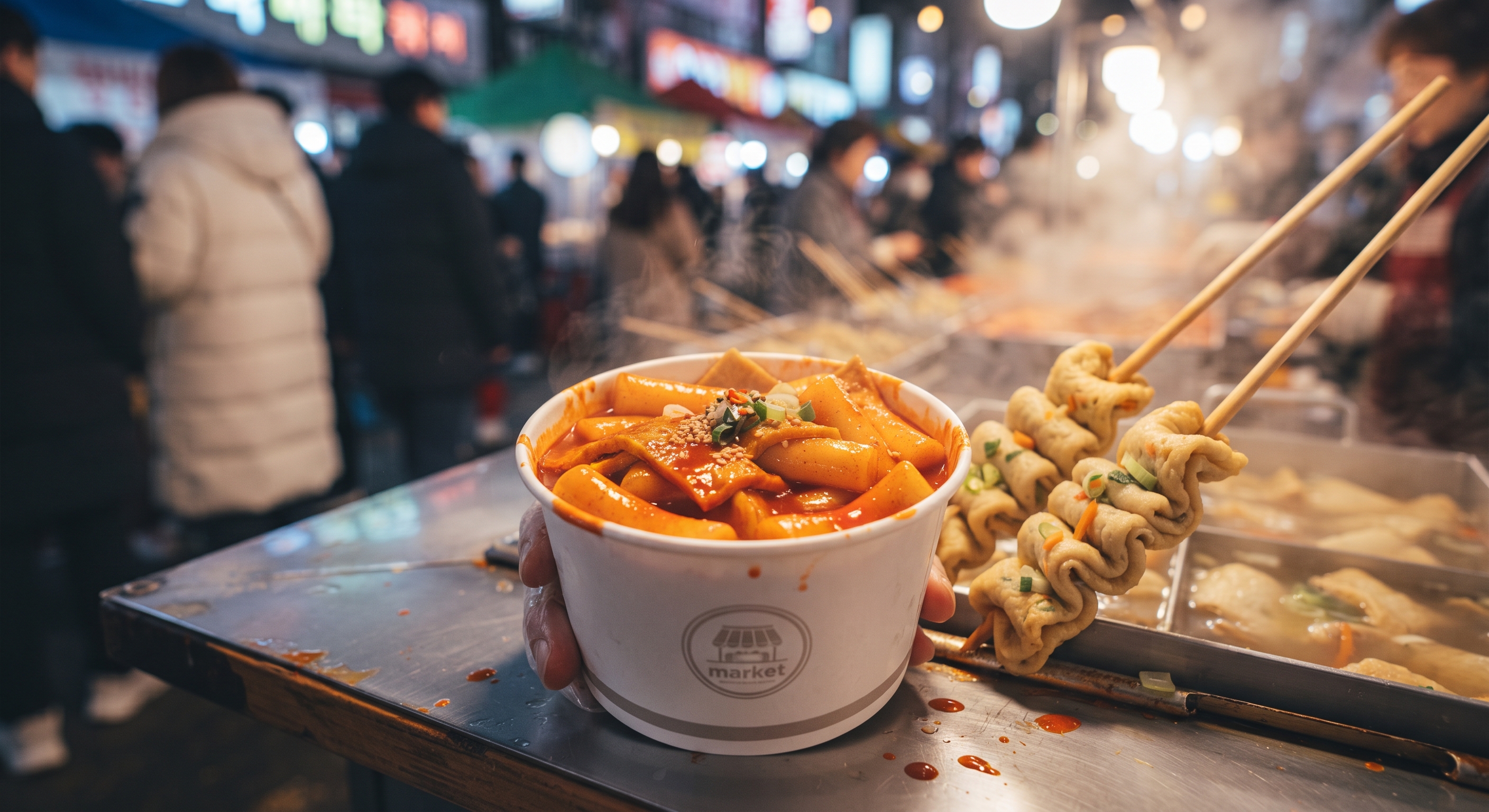
These chewy cylinder-shaped rice cakes swim in a sweet-spicy red sauce made from gochugaru (Korean chili flakes) and gochujang (fermented chili paste). Vendors often throw in fish cakes, boiled eggs, or scallions. It’s served in a small paper or plastic cup with a toothpick for spearing.
Spice level: Moderate to high, but the sweetness balances it. If you’re spice-sensitive, ask for “an maepge juseyo” (not spicy).
Hotteok (Sweet Pancakes)
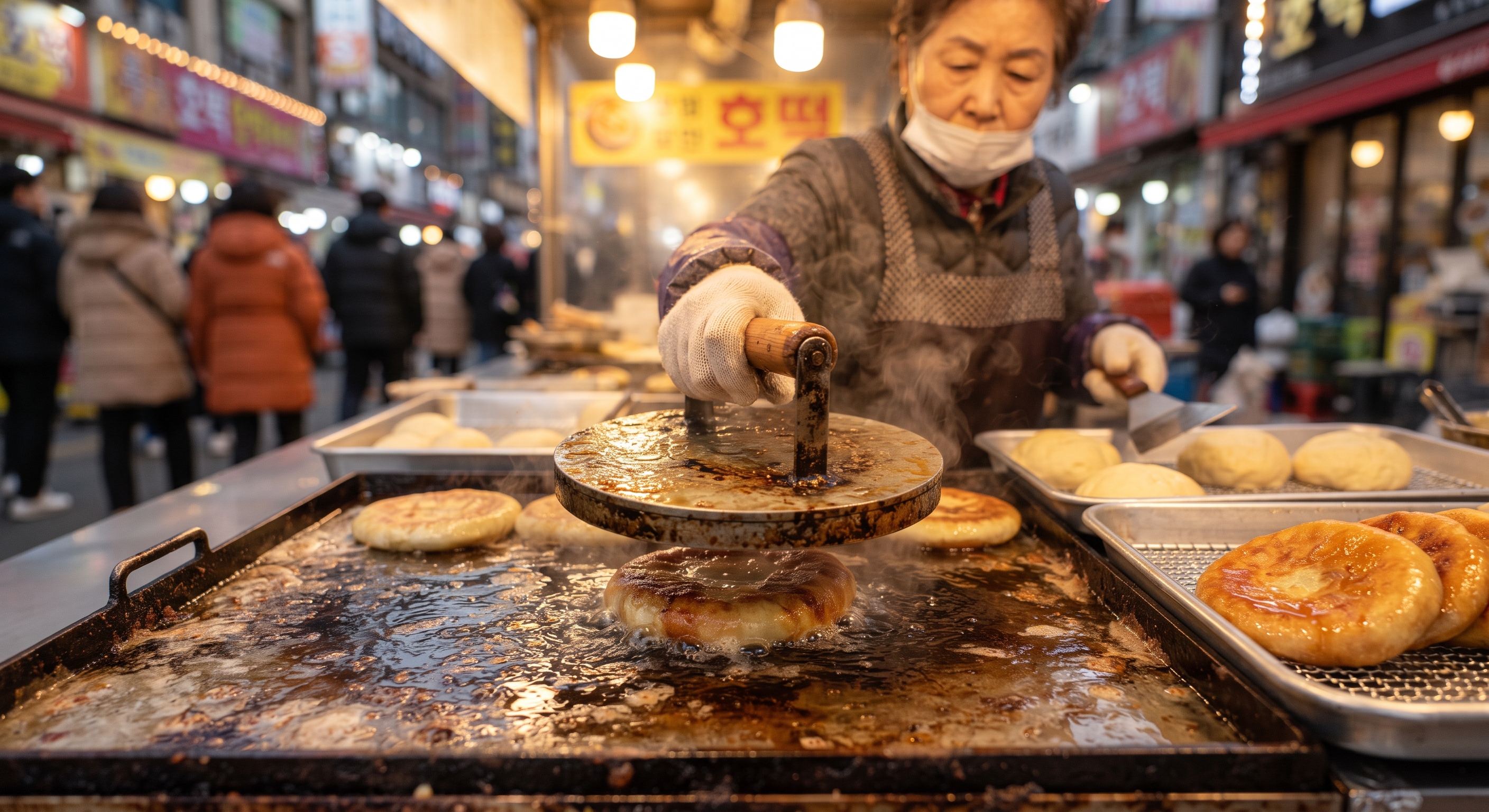
A warm, doughy pancake filled with brown sugar, cinnamon, and chopped nuts, pressed flat on a griddle until the outside crisps and the inside melts into syrup. It’s peak comfort food on a cold day.
Price range: ₩1,000–₩2,000 per pancake.
Odeng (Fish Cake Skewers)
Thin sheets of processed fish cake threaded onto wooden skewers and simmered in a light, savory broth. Vendors often let you drink a cup of the broth for free—it’s salty, warming, and considered part of the experience.
Gimbap (Seaweed Rice Rolls)
Korea’s answer to sushi rolls, but without raw fish. Fillings typically include pickled radish, egg, carrots, spinach, and imitation crab, all wrapped in rice and seaweed, then sliced into bite-sized rounds. It’s filling, portable, and budget-friendly.
Where to Find the Best Street Food
Korean street food clusters in specific zones, and knowing where to look will save you time and disappointment.
| Location Type | Best For | Vibe |
|---|---|---|
| Myeongdong, Hongdae, Insadong (Seoul) | First-timers, variety, photo-worthy snacks | Touristy but reliable; higher prices |
| Traditional markets (Gwangjang, Tongin, Namdaemun) | Authentic vendors, best value, local specialties | Crowded, fast-paced, cash-focused |
| University districts (Sinchon, Edae) | Cheap eats, late hours, experimental flavors | Student crowd, casual, lively at night |
| Subway station exits | Quick snacks, classics like hotteok and bungeoppang | Grab-and-go, limited variety |
Gwangjang Market in Seoul is often cited as the ultimate street food destination. You’ll find bindaetteok (mung bean pancakes), mayak gimbap (mini “drug” gimbap—so addictive it earned the nickname), and live octopus all under one roof.
In Busan, head to BIFF Square or Gukje Market. In Jeonju, the Nambu Market is famous for its regional takes on classics.
How to Order (Even Without Korean)
Most street food vendors don’t have English menus, but ordering is refreshingly simple:
- Point and nod. Gesture at what you want or point to what someone else is eating.
- Hold up fingers to indicate quantity.
- Pay after you receive your food in most cases, though some vendors ask for payment upfront.
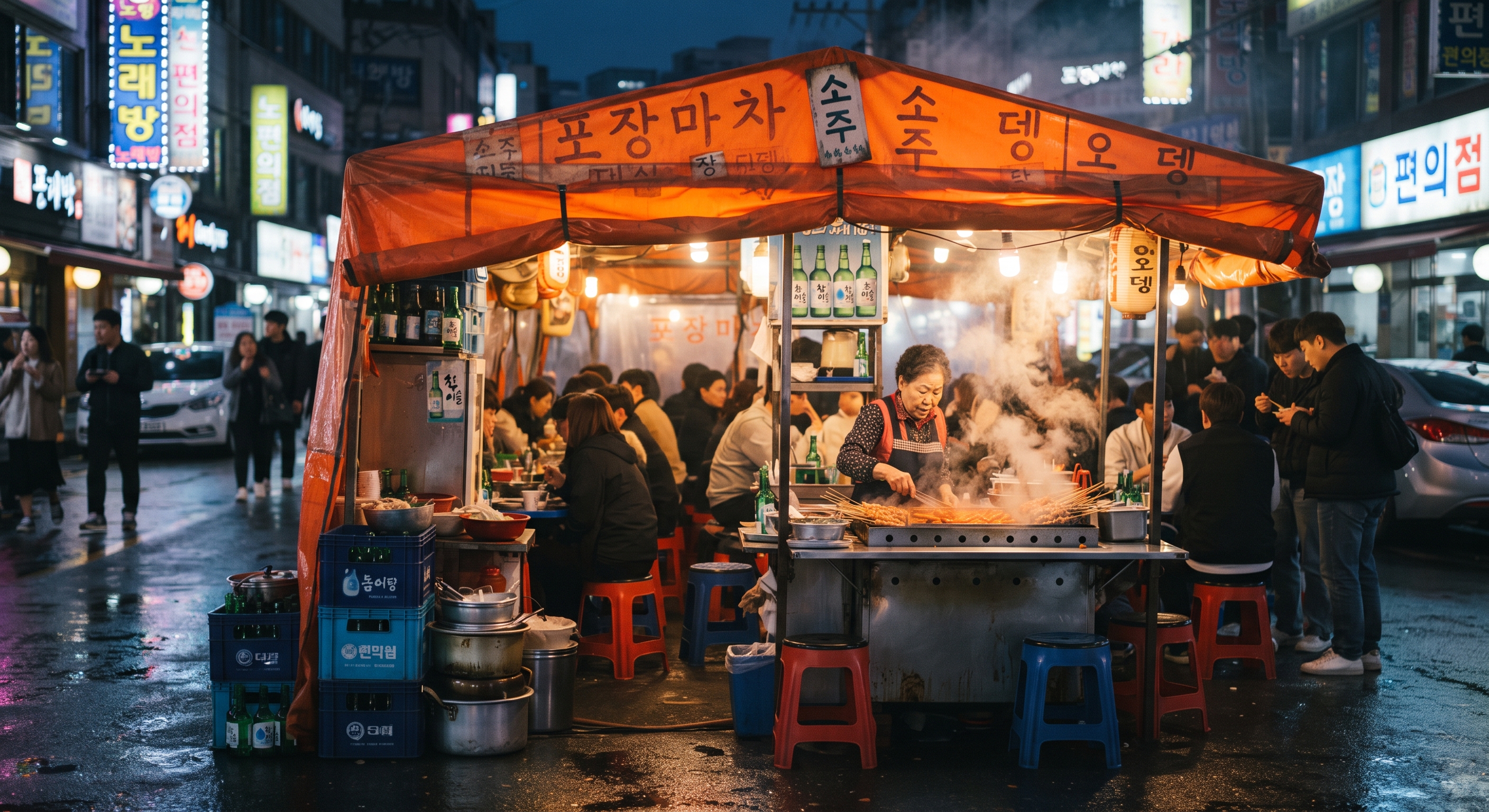
- Eat standing or walking unless there are stools nearby (common at pojangmacha tents).
If you want to take your food to go, say “pojang hae juseyo” (please wrap it). If you’re eating on-site, vendors will hand you a toothpick or chopsticks and expect you to return the cup or plate to a nearby bin when finished.
What to Expect: Etiquette and Practical Tips
Korean street food culture is casual, but a few norms will help you blend in and show respect:
- Trash goes in designated bins, usually right next to the vendor. Don’t walk away with cups or skewers unless there’s no bin in sight.
- Sharing is common. It’s normal to order one item and pass it around, especially tteokbokki or odeng.
- Eating while walking is acceptable for street food, though it’s less common with sit-down meals.
- Spice sneaks up on you. Tteokbokki and topokki sauce can feel mild at first, then build heat. Have a convenience store drink nearby if you’re sensitive.
Street food is generally very safe to eat. Vendors are regulated, and turnover is high, so ingredients stay fresh. That said, if a stall looks neglected or has no customers, trust your instincts and move on.
Beyond the Classics: Next-Level Snacks
Once you’ve mastered the basics, branch out to these:
- Twigim (fried items): Battered and deep-fried vegetables, squid, shrimp, or dumplings. Sold individually or by the bag.
- Dakgangjeong: Crispy fried chicken chunks glazed in a sweet-spicy sauce, often served on a stick.
- Bungeoppang: Fish-shaped pastry filled with sweet red bean paste, popular in winter.
- Gyeran-ppang: Warm, fluffy bread with a whole egg baked inside—sweeter than it sounds.
- Sundae: Korean blood sausage stuffed with glass noodles and vegetables. An acquired taste, but worth trying if you’re adventurous.
Final Thoughts: Dive In
Korean street food isn’t about pristine plating or Instagram-perfect presentations—it’s about flavor, speed, and community. You’ll stand elbow-to-elbow with students, office workers, and grandmothers, all drawn to the same smoky cart on a cold evening.
Start with the classics, eat what the locals are lining up for, and don’t overthink it. The beauty of street food is that it’s cheap enough to try everything, and forgiving enough that even a “mistake” order will likely taste great. Bring cash, an appetite, and a sense of curiosity—you’ll leave full, happy, and planning your next round.